Should You Rent a Porta Potty for a Backyard Party?
Rent a porta potty for a backyard party when you expect about 25 or more guests, when the home runs on a septic tank, or when you would rather keep guests out of the house. One standard unit covers most backyard parties under 50 guests. Drop-off is Friday and pickup is Monday.
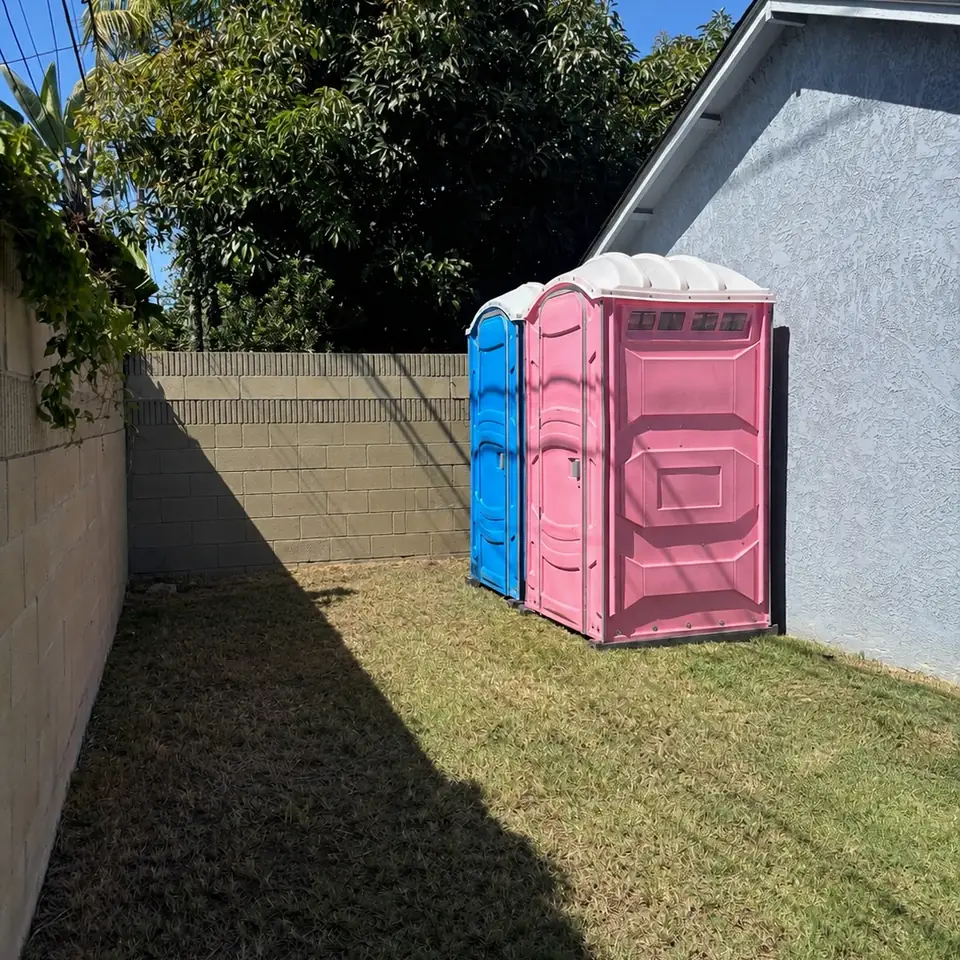
Why rent a porta potty for a party at home?
A porta potty keeps a party of 30, 50 or 80 guests from lining up at one house bathroom. Guests stay in the yard, kids stop tracking mud and pool water through the hallway, and the home toilet does not back up. For homes on septic, a rented unit also spares the tank a heavy one-day load.
Most hosts rent for 3 reasons:
- Traffic: 40 people through one bathroom means a line by the second hour.
- Privacy: bedrooms and home offices stay closed off.
- Plumbing: older pipes and septic systems are not built for party loads.
Graduation parties, crawfish boils, birthday parties and family reunions are the usual reasons. See event porta potty rental for unit options.
Can a backyard party overload a septic system?
Yes. The EPA advises spreading water use out over time, because a septic tank needs time to treat waste. A party of 50 guests can send 100 or more extra flushes into the tank in 1 afternoon. Many rural Gulf Coast homes outside city sewer lines run on septic, so a porta potty takes that load off.
The EPA septic care guide also says to flush only human waste and toilet paper. At a party, guests flush wipes, paper towels and worse. One clog can mean a pumping bill on Monday morning.
If you are not sure if your home is on sewer or septic, look at your water bill. A bill with no sewer charge usually means septic. A porta potty is a cheap way to protect the system for one weekend.
How many porta potties does a backyard party need?
One standard porta potty covers most backyard parties up to 50 guests for 4 hours. For parties over 4 hours, plan 1 unit per 40 guests. Add 1 more unit for every 4 if alcohol is served or if most guests are women or kids. Food on the menu means adding a hand-washing station.
A few examples:
- 35 guests, 3-hour birthday party: 1 standard unit.
- 60 guests, 6-hour graduation party with food: 2 units, plus 1 hand-washing station.
- 100 guests at a family reunion: 3 units, or a deluxe flushing unit with sink in the mix.
For odd numbers, use the porta potty calculator. If an older relative uses a wheelchair or walker, add a wheelchair-accessible unit.
Where should a porta potty go in a backyard?
A backyard porta potty should sit on flat, level ground within about 30 ft of where the service truck can park. A standard unit is about 44 in wide, so the path through any gate must be wider than that. Keep the unit 25 or more feet from food tables and the grill.
Good spots include the side yard, the end of the driveway or a corner of the yard. Face the door toward the party and away from the street. A little privacy goes a long way.
- Avoid soft ground and low spots after rain.
- Keep the unit off the septic drain field.
- Mark the spot with a cone or flag so the driver can drop it without you home.
For more detail, read where to place a porta potty.
When does a backyard porta potty get dropped off and picked up?
A backyard porta potty for a weekend party is usually dropped off Friday and picked up Monday. Thursday drop-off works too, at no extra cost. There is no Sunday delivery or pickup. The driver phones about 30 minutes before arrival, so you do not need to stay home all day.
Pick a morning or afternoon window when you book. Keep the unit locked until party day if you like. A hasp and padlock are free on request.
Spring graduation weekends and July 4th fill up first. Book 3 to 6 weeks ahead for those dates. For the full price picture, see the porta potty rental cost guide.
What about neighbors and HOA rules?
Most HOAs allow a porta potty for 1 weekend, but some covenants limit what can sit in a front yard or driveway. Check your HOA rules or ask the board before you book. Placing the unit in the backyard or behind a fence avoids most complaints from neighbors and the HOA.
A quick note to the neighbors helps. Let them know when the unit arrives and when it leaves. Place it away from the property line and away from their windows.
On a narrow cul-de-sac, ask where the truck can park without blocking a driveway. Units on the street may need city approval, so keep it on your own lot.